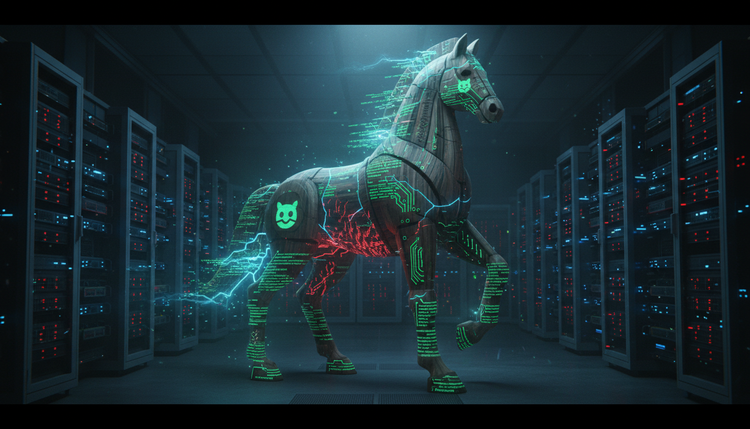
Russian Cyber Weapons Target Poland's Power Grid

Russian state-sponsored hackers have crossed a critical threshold, deploying Ukraine-tested cyber weapons against European critical infrastructure for the first time. The December 2025 attacks on Poland's power grid represent a dangerous evolution in cyber warfare—one that transforms regional conflict tools into global threats targeting the energy systems millions depend on.
What's Happening
On 29-30 December 2025, approximately 30 distributed energy facilities across Poland fell victim to a coordinated cyberattack that Polish authorities have definitively linked to Russia's Sandworm group (also known as APT44). The attackers deployed a new wiper malware called DynoWiper to target solar power stations and a major combined heat and power plant, causing solar facilities to suddenly disconnect from the grid and creating operational chaos for Poland's national electricity operator, PSE.
"They thought it was just a malfunction of the device because the plant was still producing power, they just couldn't get the remote connection," explained Marcin Dudek, head of CERT Polska, Poland's national cybersecurity authority.
The sophisticated attack took control of operational technology (OT)—the critical digital interface between networks and physical equipment—and came dangerously close to causing blackouts that could have affected nearly half a million people during the depths of Polish winter.
What makes this attack particularly significant is its use of techniques and code methodologies first developed and refined during Russia's extensive cyber campaigns against Ukraine's power grid. Since 2015, Russian hackers have repeatedly targeted Ukrainian energy infrastructure, perfecting their methods through attacks that left hundreds of thousands without power. Now, these battle-tested weapons have made their international debut.
Why It Matters
This attack represents a fundamental shift in the cyber warfare landscape. For years, Russia's most destructive cyber operations remained largely contained to Ukraine and other former Soviet states. The Poland attack shatters that containment, demonstrating that Russian military intelligence is willing and able to deploy its most sophisticated cyber weapons against NATO allies and EU members.
The timing was particularly calculated—striking during winter when energy disruption could have life-threatening consequences. Cybersecurity experts involved in the cleanup noted that the attack "could have turned deadly in winter cold," highlighting how cyber warfare is increasingly targeting civilian populations through critical infrastructure.
The UK's National Cyber Security Centre (NCSC) has already issued fresh warnings to British utilities, recognising that if Poland can be targeted, no European energy system is safe. This escalation transforms what was once a regional threat into a pan-European security challenge requiring unprecedented coordination.
What You Should Do
For Energy Sector Organisations
- Immediately review and strengthen operational technology (OT) security, particularly the interfaces between IT networks and physical control systems
- Implement enhanced monitoring for unusual disconnections or "malfunctions" that could mask cyber intrusions
- Establish air-gapped systems for critical control functions wherever feasible
For Government Agencies
- Establish rapid information-sharing protocols with energy operators to distinguish between technical failures and potential cyber attacks
- Coordinate threat intelligence sharing across international boundaries, particularly within NATO and EU frameworks
- Review and update national critical infrastructure protection strategies
For Businesses and Individuals
- Develop comprehensive backup power plans and emergency preparedness strategies
- Recognise that energy infrastructure is now a primary attack vector affecting all sectors
- Consider business continuity implications of extended power disruptions
For Cybersecurity Teams
- Study the
DynoWipermalware characteristics and update detection systems accordingly - Implement behavioural analysis for unusual operational technology disconnections
- Enhance monitoring of OT/IT convergence points where attacks typically originate
The Bigger Picture
The Poland attack signals Russia's transition from regional cyber aggressor to global threat actor. Having spent years perfecting destructive cyber capabilities against Ukraine—including the devastating 2015 and 2016 power grid attacks and the $11 billion NotPetya campaign—Russian military intelligence now possesses a mature arsenal of infrastructure-targeting weapons.
The international deployment of these capabilities suggests a strategic decision to expand cyber operations beyond traditional spheres of influence, potentially targeting any nation supporting Ukraine or opposing Russian interests. As noted above, this represents not merely an escalation but a fundamental shift in how state-sponsored cyber warfare operates.
This evolution transforms cybersecurity from a technical challenge into a national security imperative. Energy infrastructure, once considered too critical to attack, has become the primary battlefield in a new form of warfare that weaponises the very systems civilian populations depend on for survival.
Whilst the immediate threat focuses on energy systems, the implications extend far beyond. The successful deployment of Ukraine-tested cyber weapons internationally demonstrates that years of regional conflict have created a proving ground for capabilities that can now be deployed globally. Every critical infrastructure operator—from water treatment facilities to transportation networks—must now consider themselves potential targets.
Against this context, traditional approaches to cybersecurity are arguably insufficient. The Poland attack demonstrates that state-sponsored actors are willing to risk civilian casualties through infrastructure attacks, requiring a fundamental rethinking of how we protect the systems modern society depends upon. International cooperation, once optional, has become essential for survival in an era where cyber weapons developed in one conflict can be deployed globally within months.
Editor's Note: This analysis is based on breaking developments from late December 2025. As this is an evolving situation, readers should monitor official government advisories and cybersecurity alerts for the most current information.