How Dark Web Markets Are Weaponising AI for Cybercrime

The cybercrime landscape has undergone a seismic transformation in 2026, with AI-powered criminal tools surging 3,810% on dark web marketplaces according to research presented at Infosecurity Europe. What was once the domain of skilled hackers has become an accessible, subscription-based criminal enterprise where artificial intelligence handles everything from reconnaissance to ransom negotiations.
This isn't merely about criminals using ChatGPT for phishing emails—we're witnessing the emergence of autonomous AI agents that can plan and execute multi-stage attacks without human intervention. The implications for cybersecurity are profound and immediate.
The Three Pillars of AI-Enabled Cybercrime
The underground AI revolution is built on three distinct technological pillars, each serving different criminal needs and representing varying levels of sophistication. Understanding these categories is crucial for developing effective defensive strategies.
Agentic AI Tooling: Autonomous Attack Orchestrators
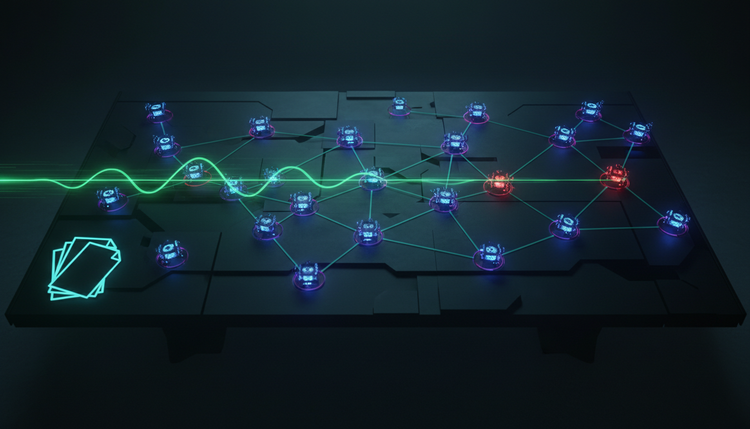
Firstly, the most sophisticated development in criminal AI is the emergence of autonomous agents capable of planning and executing complete attack chains. These aren't simple scripts—they're LLM-driven systems (Large Language Model-powered tools) that can reason, adapt, and make decisions throughout multi-step operations.
Dark web vendors are packaging these capabilities as "AI Attack Orchestrators" with names like "CyberSentinel Pro" and "AutoPwn Agent." These tools demonstrate remarkable capabilities:
- Performing reconnaissance by analysing target organisations' digital footprints
- Identifying vulnerable systems through automated scanning
- Planning lateral movement strategies within compromised networks
- Negotiating ransom payments with victims—all with minimal human oversight
The autonomous nature of these tools means attacks can continue evolving even whilst criminals sleep, creating a 24/7 threat environment that traditional security teams struggle to match.
Dark LLMs and Customised Models: The Unrestricted Intelligence Layer
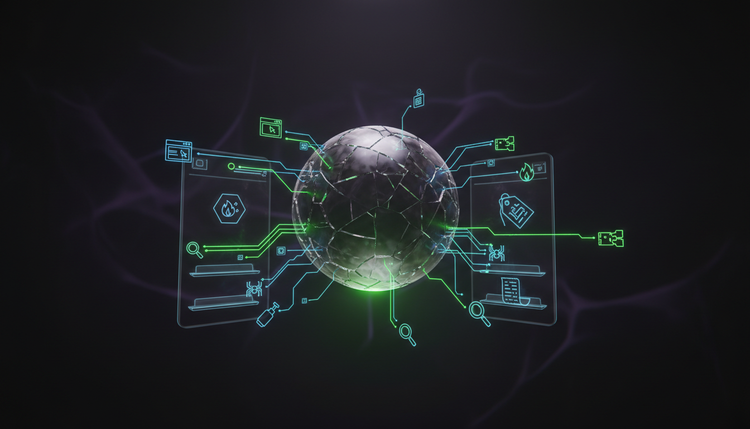
Secondly, and perhaps most concerning, is the proliferation of specialised "dark LLMs" designed without ethical guardrails. Beyond early tools like WormGPT and FraudGPT, 2026 has seen the emergence of sophisticated platforms including models specifically referenced in underground forums for their technical documentation capabilities.
Criminals are increasingly leveraging open-source LLMs like Llama and Mistral, which they customise through abliteration techniques—processes that systematically remove safety constraints from pre-trained models. These "abliterated" models can generate malware code, social engineering content, and attack strategies without the ethical limitations built into commercial AI systems.
The democratisation of AI inference technology has created a particularly troubling scenario: criminals can now run customised models on their own hardware using consumer-grade GPUs, leaving virtually no forensic touchpoints for investigators.
Unlike cloud-based AI services that maintain logs and usage patterns, locally-hosted inference provides complete operational security for criminal activities. This shift represents a fundamental challenge to traditional cybercrime investigation methods.
Generative AI Tooling: The Content Creation Engine
Finally, the third pillar focuses on specialised content generation for specific criminal use cases. Current market leaders include DarkBard (specialised for social engineering), technical documentation generators, and deepfake creation platforms that can produce convincing audio and video content from just three seconds of source material.
These tools have achieved remarkable sophistication—one vendor claims their voice synthesis technology achieves 92% success rates at bypassing KYC verification systems (Know Your Customer identity checks). The practical implications are staggering:
- Video deepfakes being used for CEO impersonation in Business Email Compromise attacks
- AI-generated personas populating romance scam operations across dating platforms
- Synthetic identities passing traditional verification processes
The Democratisation of Nation-State Capabilities
This transformation represents more than technological advancement—it's a fundamental shift in the cybercrime threat landscape. Capabilities that once required nation-state resources or elite hacking skills are now available as subscription services starting at £25 per month.
The industrialisation of cybercrime through AI has lowered barriers to entry whilst simultaneously increasing attack sophistication. Criminal organisations are adopting vendor-like business models, offering 24/7 customer support, money-back guarantees, and regular feature updates for their AI-powered attack tools.
Perhaps most concerning is the emergence of AI-native threat actors—criminal groups that build their entire operational model around artificial intelligence. These organisations can scale attacks exponentially, targeting thousands of victims simultaneously with personalised approaches that would have been impossible with traditional methods.
Defending Against AI-Powered Threats
Against this context of rapidly evolving threats, organisations must adapt their defensive strategies. Traditional security measures, whilst still important, are insufficient against AI-powered attacks that operate at machine speed and scale.
Implement AI-Aware Security Controls
Deploy detection systems specifically designed to identify AI-generated content, including deepfakes, synthetic text, and automated attack patterns. These systems must evolve beyond signature-based detection to behavioural analysis that can identify the subtle patterns of AI-generated attacks.
Strengthen Human Verification Processes
Establish out-of-band verification for high-risk transactions, using multiple communication channels to confirm identity and intent. When a video call shows your CEO requesting an urgent wire transfer, verify through a separate, pre-established channel before proceeding.
Focus on Behavioural Anomalies
Monitor for unusual patterns rather than specific attack signatures, as AI-generated attacks may not match traditional indicators of compromise. This requires a shift from reactive to proactive security postures.
Enhance Employee Training
Update security awareness programmes to include AI-specific threats like deepfake impersonation, AI-generated phishing, and synthetic identity fraud. Employees must understand that seeing and hearing are no longer believing in the age of generative AI.
Implement Zero-Trust Architecture
Assume that any communication or request could be AI-generated, requiring continuous verification throughout all interactions. This principle becomes even more critical when adversaries can perfectly mimic trusted individuals.
Deploy AI-Powered Defence Tools
Fight fire with fire by implementing defensive AI systems that can detect and respond to automated attacks at machine speed. Human analysts simply cannot match the pace of AI-driven attacks without augmentation.
An Accelerating Arms Race
The convergence of AI and cybercrime represents the fifth wave of digital threats, following previous generations of viruses, organised cybercrime, nation-state attacks, and ransomware-as-a-service. What makes this wave unique is its potential for exponential scaling—AI doesn't tire, doesn't make mistakes, and can operate continuously across multiple time zones.
Law enforcement agencies are struggling to adapt to this new reality. Traditional investigative techniques become less effective when criminals can operate through locally-hosted AI systems that leave no digital breadcrumbs. The democratisation of AI inference technology means sophisticated attacks can now originate from anywhere, executed by anyone with access to the right tools and models.
As we move deeper into 2026, the cybersecurity community must recognise that we're not merely facing smarter criminals—we're confronting an entirely new category of AI-native adversaries that operate at machine speed and scale. The organisations that adapt their defences to this new reality will survive; those that don't may find themselves overwhelmed by threats they never saw coming.
It is worth noting that whilst the challenge is significant, it's not insurmountable. By understanding the tools and techniques being deployed against us, implementing appropriate defensive measures, and maintaining vigilance in our security practices, we can build resilience against these emerging threats. The key lies in recognising that cybersecurity is no longer just a technical challenge—it's an AI arms race where the stakes continue to escalate.