
€140M Cyber Fraud Ring Dismantled in Spain
Why This Matters Right Now
In mid-July 2026, Spanish National Police — working alongside Europol, Interpol, Portuguese authorities, and Panamanian law enforcement — dismantled one of Europe's most sophisticated cyber fraud and money-laundering networks. With approximately €140 million ($160 million) stolen and a laundering infrastructure spanning four countries, this case offers a textbook illustration of how organised cybercrime has industrialised. It also serves as a stark reminder that your business or personal finances could be squarely in the crosshairs.
What Happened
On 13 July 2026, Spain's National Police announced the takedown of an international criminal organisation responsible for stealing and laundering approximately €140 million through a multi-pronged attack strategy. Four individuals were arrested across Spain, Portugal, and Panama. The operation revealed a staggering financial infrastructure: over 800 personal bank accounts, 120 business accounts, 19 shell companies, and 67 recruited money mules — all working in concert to move and obscure stolen funds.
A Diversified Criminal Enterprise
The gang's attack methods were notably diverse. Rather than relying on a single technique, the group operated what amounted to a full-service fraud enterprise, deploying at least five distinct attack vectors simultaneously:
- Fake investment platforms — professionally designed websites luring victims with promises of high returns.
- Business Email Compromise (BEC) — a technique where attackers impersonate trusted contacts via email to trick corporate finance teams into authorising fraudulent transfers.
- CEO fraud — a variant of BEC in which criminals impersonate senior executives to authorise wire transfers.
- Invoice fraud — substituting legitimate vendor payment details with accounts controlled by the criminals.
- Man-in-the-middle attacks — intercepting legitimate financial communications between two parties to redirect funds.
This diversification is significant. It demonstrates that modern fraud rings operate as structured criminal businesses, not single-method operations. If one revenue stream is disrupted, others continue generating income.
Industrial-Scale Money Laundering
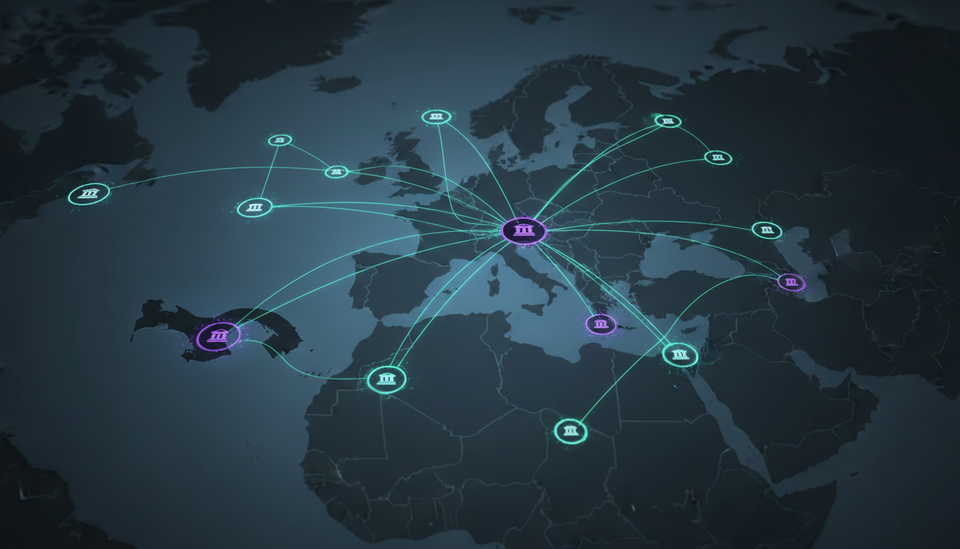
The laundering network was equally sophisticated. Funds were rapidly dispersed across hundreds of accounts to obscure their origin, funnelled through 19 registered shell companies to create a veneer of paper legitimacy, and moved internationally — including through Panama — to exploit jurisdictional gaps.
The 67 money mules (individuals who receive and forward stolen funds, often in exchange for a small commission) served as human buffers in the chain. Many were likely recruited through job scams promising easy remote work — a detail that underscores how money mule recruitment is a public safety issue, not merely a cybersecurity concern. As discussed further below, anyone approached for such a role faces serious criminal liability, even if they believe they are performing legitimate work.
Why It Matters
This case is not simply a law enforcement success story — it is a window into the maturity level of modern cybercrime organisations. The group operated with the structural sophistication of a mid-sized financial services company: dedicated roles, layered corporate structures, international reach, and redundant financial channels.
The use of over 800 bank accounts means that even if investigators flagged one account, dozens of others continued operating. This resilience-by-design approach is precisely what makes these networks so difficult to dismantle.
It is worth noting that this structural redundancy is a deliberate strategy. By distributing operations across hundreds of accounts, multiple shell companies, and several jurisdictions, the organisation ensured that partial law enforcement disruption would not bring down the entire enterprise. Dismantling it required multi-agency international coordination — not just one country's police force.
The Scale Is Consistent With Global Trends
For everyday people and businesses, the implications are direct. Investment fraud platforms are increasingly indistinguishable from legitimate brokerages. BEC attacks cost global businesses billions annually, and the FBI's 2025 Internet Crime Report — still the definitive annual benchmark — consistently ranks BEC as the highest-dollar cybercrime category. This Spanish case confirms the trend is accelerating in Europe.
Secondly, the €140 million figure is consistent with an upward trajectory in fraud scale globally. As defences improve, criminal organisations appear to compensate not by reducing activity, but by expanding their operational infrastructure. If your organisation processes wire transfers or your employees handle financial approvals, you are arguably a target — the question is when, not whether, an attempt will be made.
International Coordination as a Necessity
The involvement of Spain, Portugal, Panama, Europol, and Interpol underscores a critical reality: no single nation's law enforcement can effectively combat cross-border cyber fraud alone. Jurisdictional complexity is not merely an inconvenience for investigators — it is a deliberate tool that criminals exploit. The use of Panamanian banking corridors alongside European shell companies is a textbook example of this strategy in action.
What You Should Do
For Individuals
- Verify investment platforms independently before depositing any funds. Check registration directly with your national financial regulator (e.g., CNMV in Spain, FCA in the UK, SEC in the US). If a platform promises unusually high returns with minimal risk, treat it as a red flag until proven otherwise.
- Never act on investment advice from unsolicited contacts — whether by phone, email, or social media. Legitimate brokers do not cold-call with urgent opportunities.
- Monitor your bank accounts weekly for small, unexplained transactions. Money mule networks often test accounts with micro-deposits before executing larger moves.
- Report suspicious investment platforms to your national cybercrime unit or financial regulator immediately.
- Be alert to money mule recruitment. As noted above, anyone approached for a "remote money transfer" job or asked to receive and forward payments should report it to national cybercrime authorities without delay. These roles carry serious criminal liability for participants, even those who believe they are doing legitimate work.
For Businesses
- Implement mandatory dual-authorisation and verbal confirmation for all wire transfers above a defined threshold (e.g., €5,000). The confirmation call must go to a pre-established phone number — never one provided in the email requesting the transfer. This single control defeats the majority of BEC and invoice fraud attacks.
- Deploy
DMARC,DKIM, andSPFemail authentication protocols on all corporate domains. These standards prevent criminals from spoofing your executive email addresses in CEO fraud campaigns. - Train finance and accounts payable staff quarterly on BEC, CEO fraud, and invoice fraud scenarios. Scenario-based exercises under realistic pressure conditions build recognition skills far more effectively than passive awareness training.
- Require dual authorisation for any change to vendor payment details. A single employee approving a bank account change represents a critical vulnerability.
- Audit your vendor list for any recently changed payment information and verify changes directly with vendors via established contact channels — not via details provided in the change request itself.
The Bigger Picture
This Spanish takedown is part of a broader, accelerating pattern of European law enforcement coordination against cybercrime. Operations like this — involving Europol, Interpol, and multiple national police forces — reflect the EU's push under its cybersecurity strategy to treat cross-border cyber fraud as organised crime, not merely a digital nuisance.
The use of shell companies, money mules, and international banking corridors mirrors tactics historically associated with traditional organised crime. Law enforcement is responding in kind: following the money with the same forensic intensity once reserved for drug cartels and trafficking networks.
Cybercrime has gone corporate, and the response must be equally institutional. The threat landscape is no longer dominated by lone hackers — it is populated by structured criminal enterprises with dedicated roles, financial controllers, and international logistics.
For businesses and individuals alike, the practical implication is clear. Whilst law enforcement coordination is improving, the primary burden of prevention still falls on you — through rigorous verification procedures, staff training, and a healthy scepticism towards any unsolicited financial communication. As this case demonstrates, the organisations targeting you are well-resourced, patient, and structurally resilient. Your defences need to be equally robust.
Sources
- BleepingComputer — Spanish Police Take Down €140 Million Cyber Fraud Ring
- Help Net Security — Spanish Police Dismantle €140 Million Cybercrime Network
- Dark Reading — Police Disrupt €140M Cyber Fraud Ring in Spain
- Daily Security Review — Spanish Police Break Up €140M BEC Ring
- SC World — Spanish Police Dismantle €140 Million Fraud Ring
- Breached.company — Spanish Police €140 Million BEC Fraud Ring
- Privacy01 — Spanish Police Dismantle €140 Million Cyber Fraud Network
- OpenText Cybersecurity Community — Police Disrupt €140M Cyber Fraud Ring