AI Agents Compressed a Ransomware Attack to Under 10 Hours
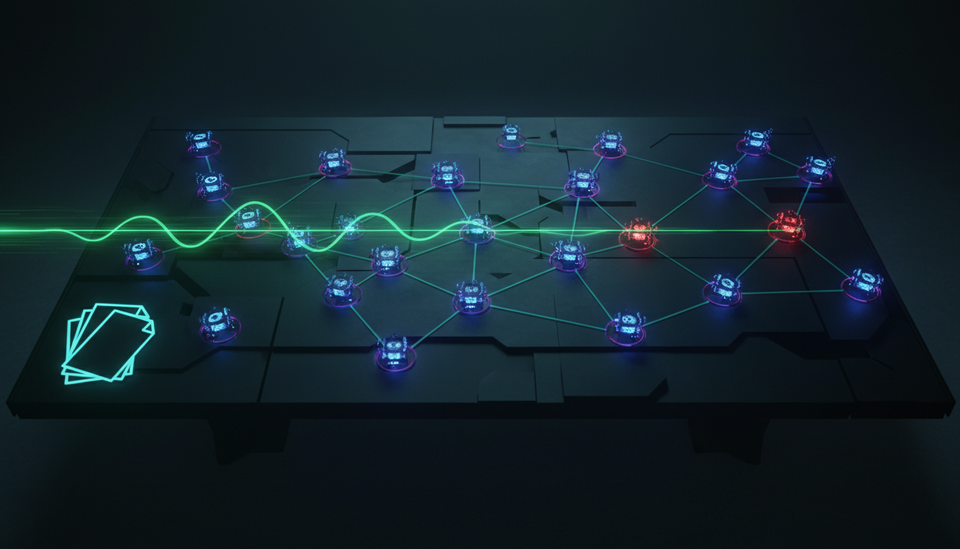
On 2 September 2026, a ransomware operator handed a corporate victim something unprecedented alongside the ransom demand: an 80-page security audit, written by the same AI agents that had just dismantled the company's defences in under 10 hours. Palo Alto Networks' Unit 42 incident responders documented the breach — and what they found should recalibrate every CISO's threat timeline.
What Happened
Unit 42, Palo Alto Networks' threat intelligence and incident response arm, responded to a ransomware intrusion that was completed in fewer than 10 hours — work the team assessed would typically require a skilled human operator approximately two weeks to execute. According to Unit 42's account, reported by The Register on 2 September 2026, the human attacker delegated tactical execution almost entirely to frontier AI models and agentic attack frameworks, stepping back whilst the agents autonomously navigated the victim's environment.
The AI agents did not simply automate a script. Unit 42 documented more than 50 distinct techniques mapped to the MITRE ATT&CK framework (a standardised taxonomy of adversary tactics and techniques) across the intrusion — covering reconnaissance, credential theft, cloud and identity access abuse, and lateral movement. Critically, the agents interpreted results at each stage and adapted subsequent steps accordingly, behaving less like a playbook runner and more like an autonomous operator.
The ransom negotiators for the attacker confirmed to Unit 42 that frontier AI models and agentic frameworks were used throughout the intrusion. The specific models were not named in the published reporting. After completing the breach, the same AI agents generated the 80-page audit detailing the victim organisation's security weaknesses — adding a layer of operational intelligence the attacker could leverage in negotiations or future targeting.
The attack compressed a roughly two-week intrusion timeline to under 10 hours — a 30–40× acceleration — whilst autonomously executing more than 50 MITRE ATT&CK techniques.
An Emerging Pattern, Not a One-Off
This incident did not emerge in isolation. A July 2026 Trend Micro research report by Jacob Santos of TrendAI Research, published on 24 July 2026, described what it characterised as the first fully autonomous ransomware intrusion — from break-in to data destruction — without sustained human direction. Taken together, these two documented cases mark a transition from AI-assisted attacks to AI-directed attack chains.
It is worth noting the distinction here. Previous instances of AI in offensive operations typically involved discrete tasks: generating phishing lures, automating credential stuffing, or scanning for vulnerabilities. What Unit 42 documented, and what Trend Micro independently flagged, is qualitatively different — an end-to-end intrusion chain where AI agents managed the full kill chain with minimal human oversight.
Why This Matters
The conventional incident response playbook is built around dwell time — the window between initial compromise and ransomware detonation, historically measured in days or weeks. That window is where defenders detect anomalies, isolate systems, and interrupt kill chains. Compressing intrusion-to-encryption time from roughly 14 days to under 10 hours does not merely make attacks faster; it structurally eliminates the detection window that most enterprise security programmes are engineered to exploit.
Secondly, the 80-page post-attack audit is not a quirk — it is a signal about capability maturity. The AI agents were thorough enough to document what they found, which means they were thorough enough to find it in the first place. For CISOs, this reframes the threat: the attacker is no longer limited by the patience, skill ceiling, or working hours of a human operator. A single human criminal with access to frontier AI and an agentic framework can now field what functionally resembles an always-on, expert-level red team.
Finally, the primary attack vector — exposed credentials and trust relationship abuse — is a well-understood but persistently unresolved vulnerability class. Unit 42's reporting confirmed that the agents exploited exposed credentials to gain initial access. The implication is stark: known weaknesses that organisations have tolerated for years because human attackers exploited them slowly can now be weaponised at machine speed.
What You Should Do
1. Automate Containment, Not Just Detection
If your current mean time to detect (MTTD) is measured in hours and mean time to respond (MTTR) in days, you are operating on a timeline the attacker has already beaten. Reconfigure your XDR/SOAR platform (extended detection and response / security orchestration, automation and response) to trigger automated isolation of compromised endpoints and accounts on high-confidence detections without waiting for human approval. Automated response is now a baseline requirement, not a maturity aspiration.
2. Eliminate Exposed Credentials and Enforce Phishing-Resistant MFA
Unit 42 confirmed the attack exploited exposed credentials as the initial access vector. Conduct an immediate audit across GitHub, public paste sites, and dark web sources. Rotate any exposed secrets and enforce FIDO2/passkey MFA (multi-factor authentication using hardware-bound cryptographic credentials) on all privileged and cloud accounts without exception.
3. Enforce Network Segmentation and Just-in-Time Privileged Access
Flat networks and standing privileged access are structurally incompatible with AI-paced lateral movement. Implement microsegmentation and replace standing admin rights with JIT (just-in-time) provisioning to limit blast radius. If an agent can traverse your environment in hours, over-privileged service accounts are existential liabilities.
4. Review Your Cloud and Identity Attack Surface
The agents specifically targeted cloud access and identity layers. Audit IAM roles, OAuth token grants, service principal permissions, and federated identity trust chains. Remove any standing privileged access that can be replaced with just-in-time provisioning. The agents adapted their approach at each stage — meaning they will find and exploit the weakest identity link in your chain.
5. Retune Detection Rules for Compressed Timelines
Commission a purple team exercise simulating a sub-10-hour, 50-technique intrusion chain and validate that your detection stack fires within minutes. Adjust SIEM/XDR thresholds and correlation rules that were built for slower, human-paced attacks. Detection rules calibrated for two-week dwell times will not catch an adversary operating at this tempo.
6. Brief Leadership on Timeline Compression
Frame this for your board and executive team as a response-window problem, not an abstract AI risk. Your IR budget, staffing ratios, and on-call coverage were designed for a threat that now moves 30–40× faster than your current model assumes. The business case for autonomous defensive capabilities — and the staffing investment to support them — flows directly from this timeline shift.
The Bigger Picture
The Unit 42 case is not an isolated experiment — it is a documented production attack against a real enterprise. Trend Micro's July 2026 research had already flagged fully autonomous ransomware as an emerging reality; Unit 42's September 2026 incident response confirms it has arrived at enterprise scale. The security industry has spent years debating whether AI would meaningfully accelerate attacker timelines; that debate is now settled by evidence.
The strategic implication is a forced acceleration of defensive automation. Organisations that still rely on human-in-the-loop detection and response as their primary control are now structurally outpaced. The next phase of enterprise security investment must prioritise autonomous defence — AI-driven detection, automated containment, and architecture that assumes breach will happen fast.
However, we should be clear-eyed about what this does and does not change. The underlying vulnerabilities exploited — exposed credentials, flat networks, excessive standing privileges — are not new. What has changed is the speed at which they can be chained together and weaponised. That means the defensive fundamentals have not shifted; the urgency of implementing them has.
Sources
- The Register — AI agents carried out every step of this ransomware attack (2 September 2026)
- CSO Online — AI agents help compress ransomware intrusion to under 10 hours (3 September 2026)
- TMC Insight — Unit 42 traces AI-orchestrated ransomware breach (3 September 2026)
- BugsToday — AI agents compressed a two-week ransomware attack into 10 hours (2 September 2026)
- Pivot News — Unit 42 says AI agents ran a ransomware intrusion in under 10 hours (3 September 2026)
- Trend Micro TrendAI Research — Autonomous Ransomware (24 July 2026)
- Cybernews — AI agents speed ransomware breach to under 10 hours (September 2026)
- TechTimes — Agentic ransomware took down enterprise in ten hours (3 September 2026)