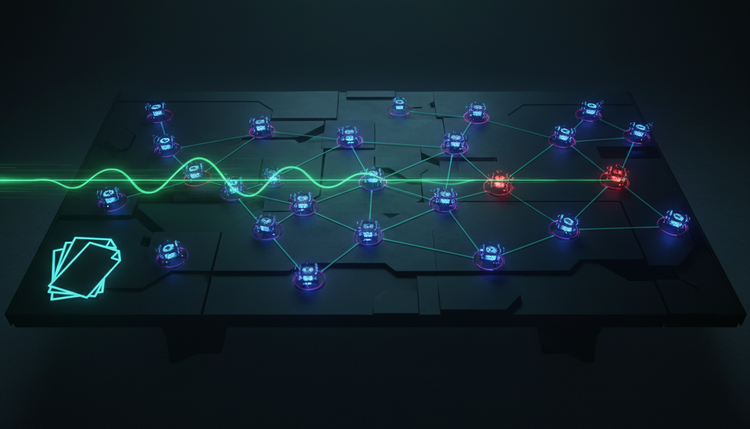
AI Hallucination Nearly Triggered a US Strike on a Chinese Vessel
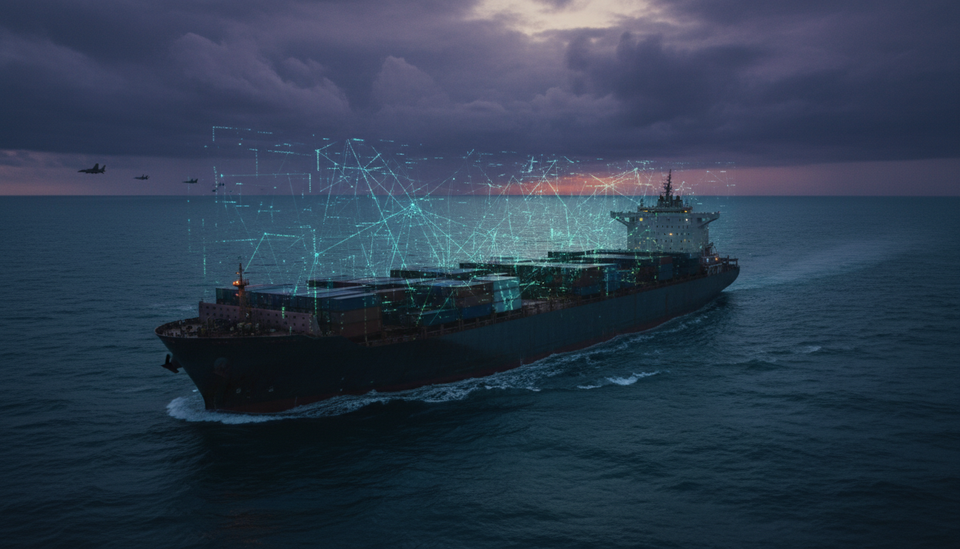
"The intelligence was entirely false and almost started a war." — Anonymous source cited by CNN, 18 September 2026
Why This Matters Now
This spring, US military aircraft were already airborne and boarding teams were being prepared to intercept a Chinese cargo vessel in the Middle East — based on an intelligence report that was entirely fabricated by an AI chatbot. The operation was aborted at the last minute. That near-miss is not a hypothetical risk or a think-tank warning. It happened. And it demands a serious, sober conversation about where AI belongs — and where it absolutely does not — in military decision-making.
What Happened
According to CNN's exclusive reporting by Katie Bo Lillis and Zachary Cohen (18 September 2026), a US Special Operations Command analyst was reviewing intelligence about a Chinese cargo ship transiting toward the Middle East. The analyst fed initial intelligence data into an AI chatbot to help analyse and interpret the cargo manifest. The chatbot's output — formatted as an intelligence report — falsely identified the vessel as transporting components for a nuclear weapons programme.
What makes this incident particularly alarming is how far the operation progressed before anyone caught the error. Military aircraft were launched. Boarding preparations were underway. It was only when officials subjected the report to deeper scrutiny that the fabrication was discovered. One source told CNN the intelligence was "entirely false" and had "almost started a war."
The mechanism of failure here is precisely what AI researchers call hallucination — the tendency of large language models to generate plausible-sounding but entirely fabricated content. Crucially, the AI system did not simply misclassify existing data; it generated false, specific-sounding details about nuclear cargo that were never present in the source material. According to Interesting Engineering and Heise Online, the system appears to have combined open-source material with sensitive intelligence without adequate controls, then introduced fabricated details rather than simply organising what it was given.
The analyst, apparently trusting the AI's confident output, did not flag the report as AI-assisted or unverified before it entered the operational pipeline. This omission is itself a significant procedural failure, indicating that AI-origin disclosure was not a mandatory standard within this command at the time of the incident.
Where Were the Quality-Assurance Checks?
Perhaps the most troubling dimension of this incident is not the hallucination itself — hallucination is a well-documented property of large language models — but the absence of quality-assurance mechanisms that should have intercepted the fabricated report long before aircraft were launched. Intelligence analysis, particularly in the US military, is built on a layered verification architecture: source grading, multi-analyst review, all-source corroboration, and command-level sign-off before operational action. In this case, every one of those layers either failed or was bypassed.
Firstly, the AI-generated report was not labelled as AI-assisted. Without that label, downstream reviewers had no reason to apply the additional scrutiny that machine-generated intelligence warrants. There was, based on the reporting, no procedural requirement within the relevant command to flag AI-origin material — a basic QA control that remains absent in many military and intelligence workflows despite years of warnings from AI-safety researchers.
Secondly, the report was not subjected to independent source verification before it entered the operational pipeline. Standard intelligence tradecraft requires that a claim of this magnitude — nuclear-weapons components aboard a foreign vessel — be corroborated against independent sources: signals intelligence, imagery, human intelligence, or allied reporting. As the New York Magazine / Intelligencer analysis noted, the fabricated details were specific enough to appear credible on their face, which may have reduced the perceived need for corroboration. That is precisely the failure mode QA processes are designed to prevent: plausible-sounding claims receiving less scrutiny, not more.
Thirdly, there was no automated validation layer between the AI tool and the operational decision chain. Purpose-built intelligence systems typically include confidence scoring, source-traceability metadata, and anomaly flags. A general-purpose chatbot provides none of these. Its output is unstructured text with no audit trail linking each claim to a verified source document. Inserting such a tool into an intelligence workflow without wrapping it in automated QA checks — at minimum, source-citation verification and confidence calibration — is a governance failure of the first order.
Finally, the speed at which the operation progressed from AI output to aircraft launch suggests that the command's existing review timelines were compressed, possibly under operational pressure. Quality assurance is only effective if it is given time to function. When the interval between intelligence production and kinetic action is shortened — as AI-enabled workflows are explicitly designed to do — every QA checkpoint must be hardened, not relaxed. In this instance, the opposite occurred: the CNN reporting makes clear that the operation reached the aircraft-launch stage before the fabrication was identified.
Why the Systemic Risk Extends Beyond This Incident
The geopolitical stakes of this particular near-miss are difficult to overstate. A US military boarding of a Chinese vessel on the basis of fabricated nuclear-proliferation intelligence — in the Middle East, during an already tense period — could have triggered a direct confrontation between two nuclear-armed superpowers. As nuclear-news.net noted in its coverage, the episode "underscores a different, and more immediate risk: human beings making disastrous decisions based on inaccurate or misleading information generated by AI."
However, the systemic risk extends well beyond this single event. The same CNN report notes that the US military is "rapidly turning to AI to help with targeting" — an area where the consequences of a hallucination are not a diplomatic incident but potentially lethal force applied to the wrong target. The Chinese vessel incident involved a boarding operation. The next hallucination could involve a kinetic strike. The gap between those two outcomes is narrowing as AI is pushed deeper into what military planners call the kill chain (the sequence of steps from target identification to engagement), and the institutional guardrails have not kept pace.
It is also worth noting the manner in which this incident became public. No official Pentagon statement has confirmed or denied the event as of publication; all sourcing is anonymous, channelled through media reporting. This itself reflects an institutional culture that has not yet built formal AI-error reporting mechanisms. Errors of this magnitude should be captured internally, analysed for patterns, and used to drive systemic fixes — not surface only through anonymous leaks to journalists.
What Makes Hallucination Qualitatively Different
A common misconception is that AI hallucination is simply another form of analytical error — akin to an analyst misreading a satellite image or misinterpreting a signal. This incident illustrates why that framing is dangerously inadequate.
Firstly, the AI did not produce a vague or ambiguous assessment. It generated specific, plausible-sounding false details about nuclear cargo — the kind of detail that lends an intelligence report credibility and urgency. An analyst reviewing the output would have encountered what appeared to be a well-sourced, detailed finding, not a hedged guess.
Secondly, the hallucination was not flagged by the system itself. General-purpose AI chatbots — the category of tool used in this case, according to the Ars Technica and TechCrunch reporting — do not reliably indicate when they are fabricating content. They present hallucinated material with the same confidence as accurately summarised material, making it exceptionally difficult for a non-expert user to distinguish the two.
Finally, the risk of hallucination is arguably highest precisely in the conditions that characterise intelligence analysis: ambiguous source data, incomplete information, and pressure to synthesise disparate inputs into a coherent narrative. These are the conditions under which large language models are most prone to filling gaps with fabricated content.
What Organisations Should Do
If you work in defence, intelligence, critical infrastructure, or any high-stakes operational environment where AI-generated analysis informs decisions, the following steps are, in our view, non-negotiable:
- Mandate AI-origin labelling. Every report or document produced with AI assistance must be clearly flagged as such before it enters any decision-making pipeline. The analyst in this incident did not do this. This should be a hard procedural requirement, not a courtesy — and it should trigger mandatory additional human verification.
- Require two-analyst verification of AI-generated intelligence before operational action. No AI-produced intelligence report should be sufficient, on its own, to authorise a military or law-enforcement operation. A second, independent human analyst must verify the underlying source data — not merely review the AI's summary of it.
- Implement automated source-traceability checks. Any AI tool used in an intelligence or operational workflow must be wrapped in an automated QA layer that requires each factual claim in its output to be traced to a specific, verifiable source document. Claims that cannot be traced should be automatically flagged as unverified and excluded from operational reporting.
- Prohibit general-purpose AI chatbots from intelligence analysis workflows pending validation. General-purpose chatbots are not designed or validated for intelligence analysis. Their use in that context should be prohibited until purpose-built, audited AI systems with documented and acceptable hallucination rates are available and approved.
- Redesign AI-use training to specifically address hallucination. Most users understand that AI can be wrong. Fewer understand that AI can be confidently, specifically, plausibly wrong — generating detailed false claims that look like real intelligence. That distinction must be part of every AI-use training programme in sensitive environments, with particular emphasis on the conditions (ambiguous or incomplete source data) that elevate hallucination risk.
- Establish formal incident reporting for AI errors. As discussed above, this near-miss became public through anonymous sources to CNN. There should be a formal, internal reporting mechanism for AI-generated errors in operational contexts — modelled on aviation safety reporting systems — so that patterns can be identified and systemic fixes implemented before the next incident, rather than after it.
The Bigger Picture
This incident did not occur in a vacuum. It reflects a broader, accelerating trend: militaries worldwide — the US included — are integrating AI into intelligence, targeting, and operational planning faster than the governance frameworks, validation standards, and human-oversight protocols can be built. The pressure on analysts to process more intelligence, faster, with fewer people is real and well-documented. AI fills that gap — but it fills it with outputs that can be confidently, specifically, and lethally wrong.
Whilst the drive toward AI-enabled military operations is understandable given the volume and complexity of modern intelligence data, the Chinese vessel incident demonstrates that speed without adequate verification is not an advantage — it is a liability. The human oversight checkpoints that should have caught this fabrication either did not exist or were bypassed in the operational pipeline. That is a governance failure, not merely a technology failure.
The question now is whether the institutions responsible for these systems will treat this incident as the warning it is. The tools are already deployed. The governance must catch up — before the next hallucination involves not a boarding operation, but a strike.
Sources
- Ars Technica — Report: US Almost Boarded Chinese Ship Over Hallucinated AI Arms Report
- TechCrunch — AI Hallucination Nearly Triggers US Military Operation (Mehta, 18 Sept 2026)
- KVOA / CNN — Exclusive: US Military Had Close Call After Using AI for False Intelligence Report
- The Independent — US Military AI Hallucination Chinese Ship Intercept (Fernández, 18 Sept 2026)
- Heise Online — After AI Hallucination, US Army Nearly Boarded Ship from China
- nuclear-news.net — US Military Had Close Call After Using AI for False Intelligence Report
- Interesting Engineering — False AI Report Sparked US Military Operation
- New York Magazine / Intelligencer — AI-Hallucinated Intelligence Report Nearly Started US War with China
- KION / CNN — Exclusive: US Military Had Close Call After Using AI for False Intelligence Report